 Skip to content

Shortly before the Milano Cortina 2026 Winter Olympic Games kicked off last weekend, International Olympic Committee President Kirsty Coventry signaled that the Games are set to undergo significant changes in the coming years.
This comes as the IOC continues its review of more than 450 medal events, part of a broader effort to keep the Olympics engaging for younger audiences.
With this in mind, Habo conducted a study in the United States to measure the level of interest and engagement in the 2026 Olympic Games.
The research found that the majority of adult Americans (77%) plan to watch the Winter Games, with interest levels similar to those for the Summer Games, driven more by the competition than the ceremonies (88% vs. 66%).
The study also revealed significant differences in viewership preferences and motivators across demographics, especially among age groups.
Younger Americans are less likely to follow the Olympic Winter Games than older generations, and are not as motivated by national pride.
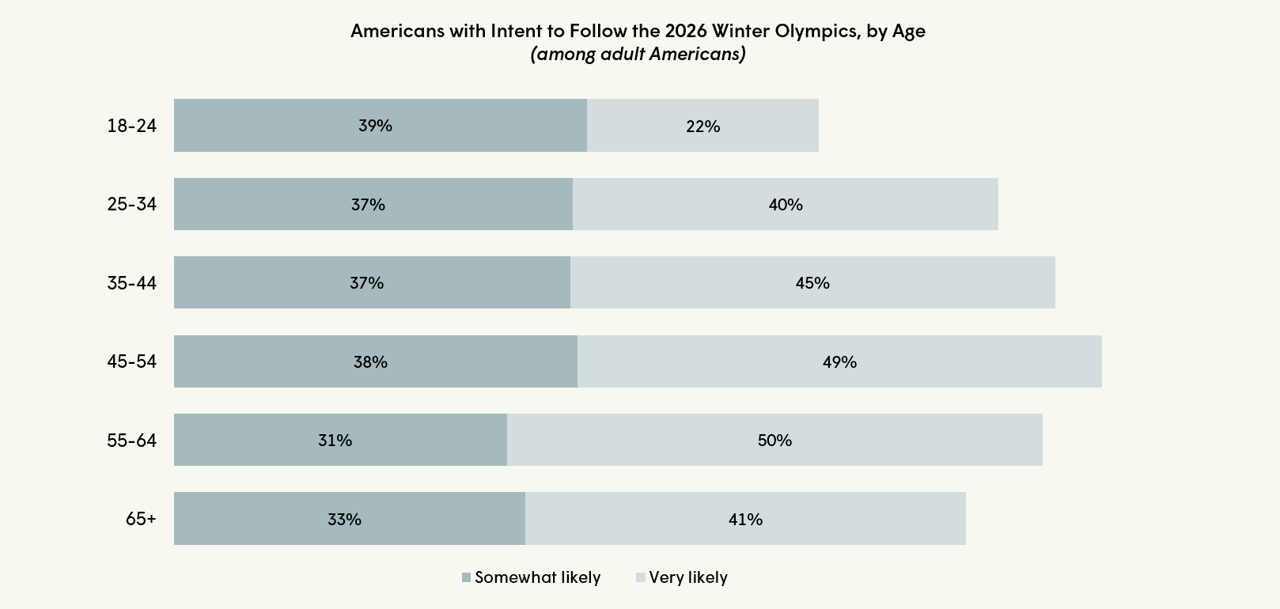
Habo’s study found a significant generational difference in motivation and level of intent to follow the 2026 Winter Games; only 22% of young Americans indicated that they are very likely to watch, compared to an average of 45% among older age groups.
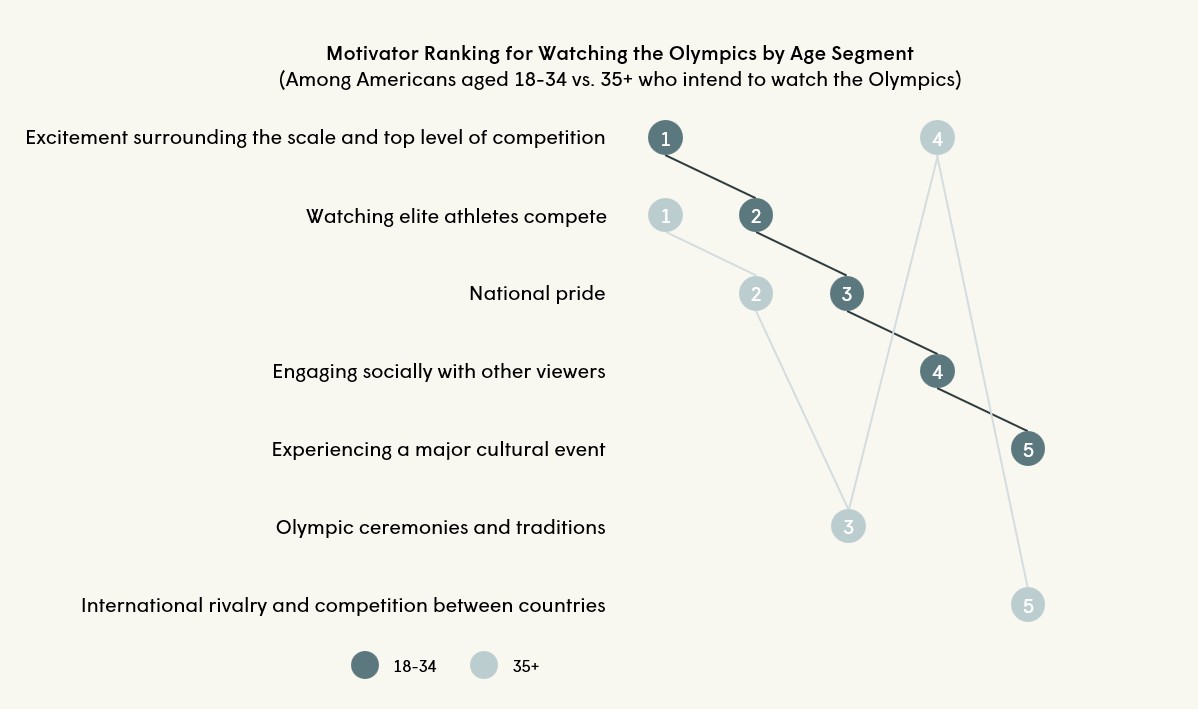
Although all age groups are motivated to watch the Winter Games to witness athletes compete at the highest level, Olympic traditions and ceremonies hold significantly less appeal for younger audiences. Instead, they are more compelled by the excitement, uniqueness, and scale of the Olympic Games.
National pride is also less of a motivator for younger audiences, who are more attracted to the Olympics as a stage for elite athletes and global competition. They resonate strongly with stories of athletes pushing physical and mental boundaries, especially in high-intensity or visually striking sports.
This is consistent with the sport preferences among younger Americans, who tend to favor action-oriented sports such as snowboarding, freestyle skiing, ski jumping, figure skating, and hockey.
Several winter sports generate the most interest among American viewers
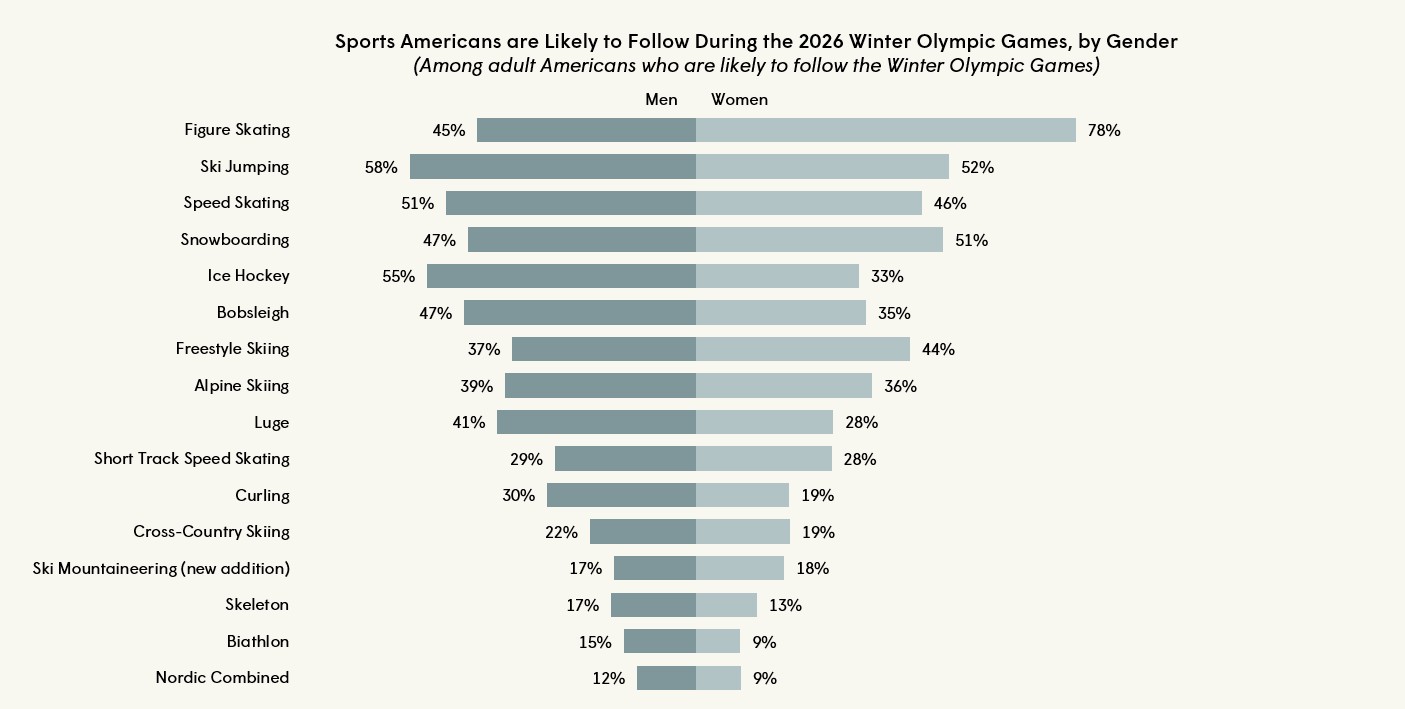
Across all demographics, figure skating, ski jumping, speed skating, snowboarding, and hockey rank the highest in terms of intent to follow.
Women are significantly more attracted to figure skating and snowboarding, while men are more likely to follow ski jumping, speed skating and ice hockey, particularly noteworthy this year due to NHL player participation for the first time since 2014.
Especially as the IOC continues to evolve, several disciplines seek to take the opportunity to gain inclusion in upcoming Winter Games. Among them, the winter triathlon—which combines running, mountain biking, and cross-country skiing, all on snow—generates the most interest across all age groups and genders, followed by team alpine skiing.
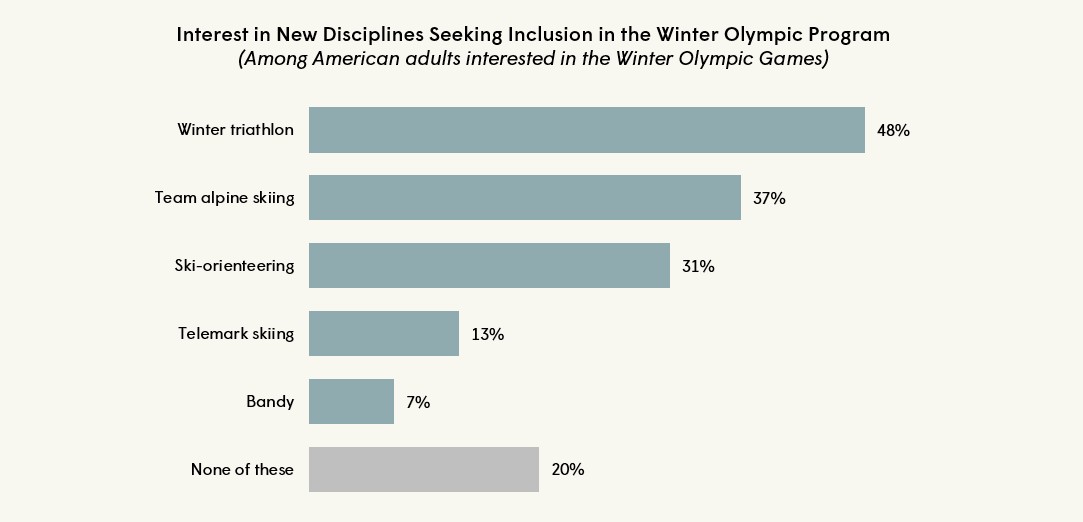
Of the potential additions, bandy ranks lowest overall but draws particular interest among younger Americans (ages 18–34).
In order for the IOC to attract younger audiences and cultivate engagement in new generations, it should develop strategies around their key motivators. While adding appealing new disciplines to the program could contribute to this effort, strategy should also focus on optimizing the viewing experience of the competitions and the key moments beyond them.
Based on its expertise in the sport sector, Habo recommends incorporating the following considerations when developing strategies to more effectively engage younger audiences:
- Integrate context around the sports themselves (statistics, history, etc.) to fuel viewer excitement during live competition content
- Develop additional engaging shorter-form content and event highlights that appeal to younger audiences across platforms
- Include the audience’s voice in the competition content through gamification or voting initiatives
- Continue using innovative approaches and introducing unexpected elements into ceremony programs to impart the event’s cultural significance while engaging younger generations.